


When it comes to measuring material hardness in manufacturing, metallurgy, and quality control, the Brinell hardness tester and the Rockwell hardness tester are two of the most widely used instruments. Although both serve the purpose of evaluating how resistant a material is to deformation, the methods, applications, and results between these devices differ significantly. Understanding these differences is crucial for selecting the right hardness testing equipment for your specific industry needs and improving your quality assurance processes.
The fundamental difference between the Brinell hardness number (BHN) and Rockwell hardness number (HR) lies in the way indentations are made on the test specimen.
| Feature | Brinell Hardness Tester | Rockwell Hardness Tester |
|---|---|---|
| Indentation Method | A steel or carbide ball indenter (typically 10 mm diameter) is pressed into the surface under a heavy load. | A steel ball or diamond cone (called a “brale”) is pressed under a preliminary load, followed by a major load, with the depth of penetration directly measured. |
| Load Range | 3000 kgf (heavy load), sometimes 500 to 3000 kgf depending on material thickness. | Typically ranges from 15 to 150 kgf depending on scale used (e.g., HRB, HRC). |
| Measurement | Diameter of the indentation is measured visually using a microscope, and hardness is calculated. | Depth of penetration is electronically or mechanically measured and converted into hardness number instantly. |
Different materials respond differently to Brinell and Rockwell testing because of the indenter size, load applied, and measurement method.
Additionally, Rockwell testing requires a relatively smooth, polished surface, whereas Brinell testing can tolerate rougher surfaces.
Rockwell hardness testers offer the advantage of rapid measurements with minimal operator involvement. Their digital or mechanical gauges provide immediate readouts, eliminating manual calculations and reducing human error.
In contrast, the Brinell method is slower because it involves measuring the diameter of the indentation using a microscope. This step requires more skill and time but provides a very stable and reliable hardness number for certain materials.
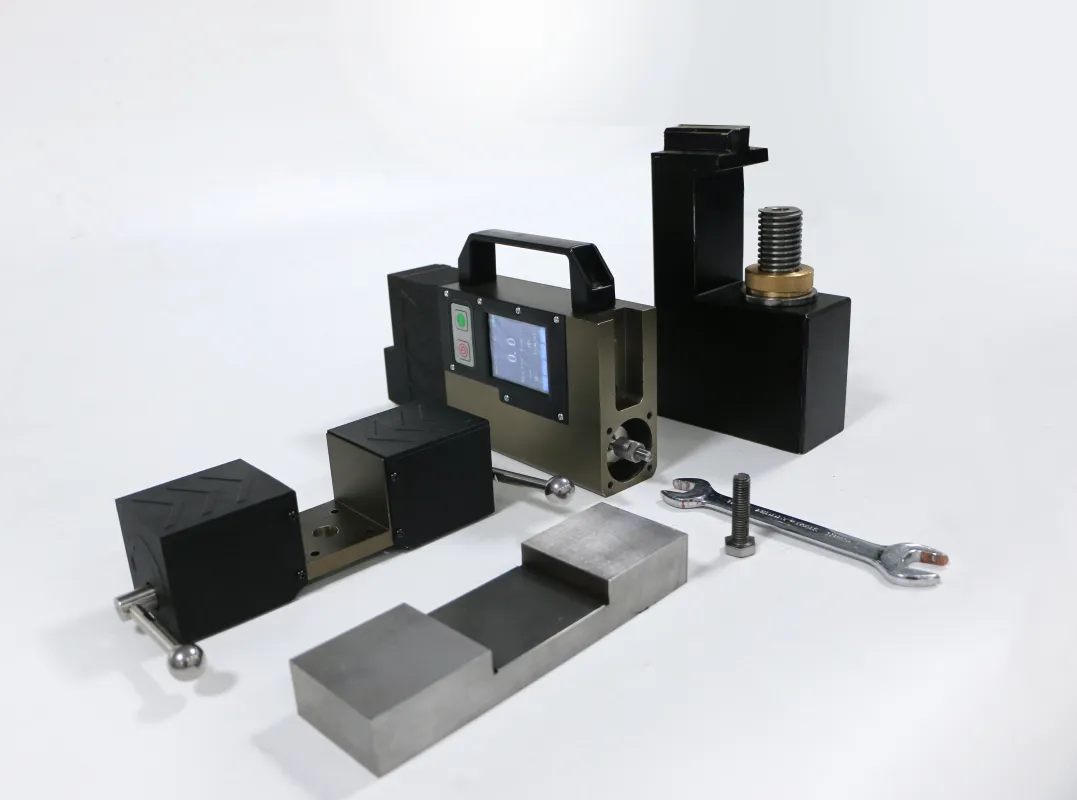
Moreover, Rockwell testers are often more portable and suitable for in-line testing, while Brinell testers, being generally larger and heavier, are mostly found in dedicated labs.
The Brinell Hardness Number (BHN) is calculated by dividing the applied load by the surface area of the indentation, which is mathematically derived from the measured diameter. For example, a medium carbon steel sample might have a BHN ranging from about 150 to 300.
The Rockwell Hardness Number (HR) depends on the scale used. The most common Rockwell scales include:
Conversion between BHN and HR scales is possible but approximate because they reflect different empirical relationships.
To select wisely between the two testers, consider their typical uses:
Knowing these specializations ensures optimal measurement accuracy and prevents damage to sensitive parts.
Ready to elevate your hardness testing process? Discover our selection of advanced Brinell and Rockwell hardness testers designed for precision, durability, and ease of use in industrial environments. Whether measuring large castings or fine finished components, our instruments ensure your products meet the highest standards with accuracy and reliability.
 HR-150A Rockwell hardness tester
manual Rockwell hardness tester usage guide
hardness testing operation procedure
industrial on-site hardness measurement
global hardness tester after-sales service
Electronic Brinell Hardness Tester Calibration
Standard Hardness Blocks
ISO 6506
JIS Z2243
Hardness Tester Maintenance
Vickers hardness testing
Rockwell hardness testing
hardness testing methods
manufacturing hardness measurement
industrial hardness testing equipment
HR-150A Rockwell hardness tester
manual Rockwell hardness tester usage guide
hardness testing operation procedure
industrial on-site hardness measurement
global hardness tester after-sales service
Electronic Brinell Hardness Tester Calibration
Standard Hardness Blocks
ISO 6506
JIS Z2243
Hardness Tester Maintenance
Vickers hardness testing
Rockwell hardness testing
hardness testing methods
manufacturing hardness measurement
industrial hardness testing equipment


Hardness-TesterHV-1000-1.jpg?x-oss-process=image/resize,h_800,m_lfit/format,webp)


