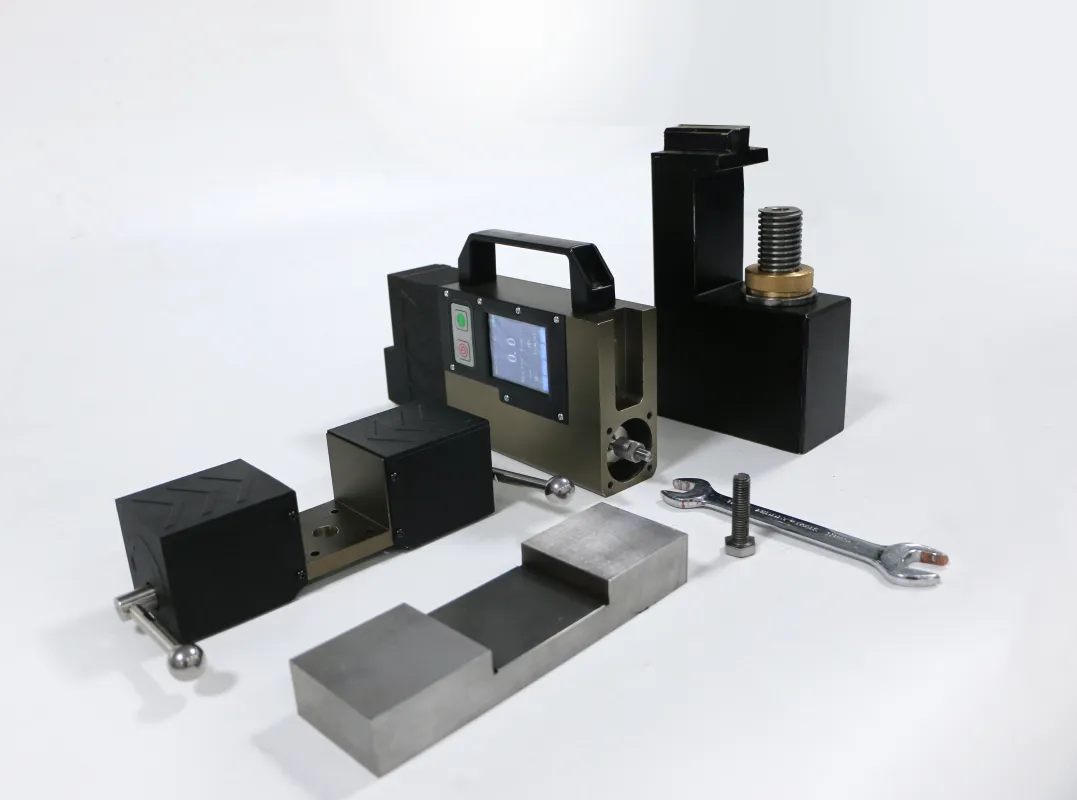
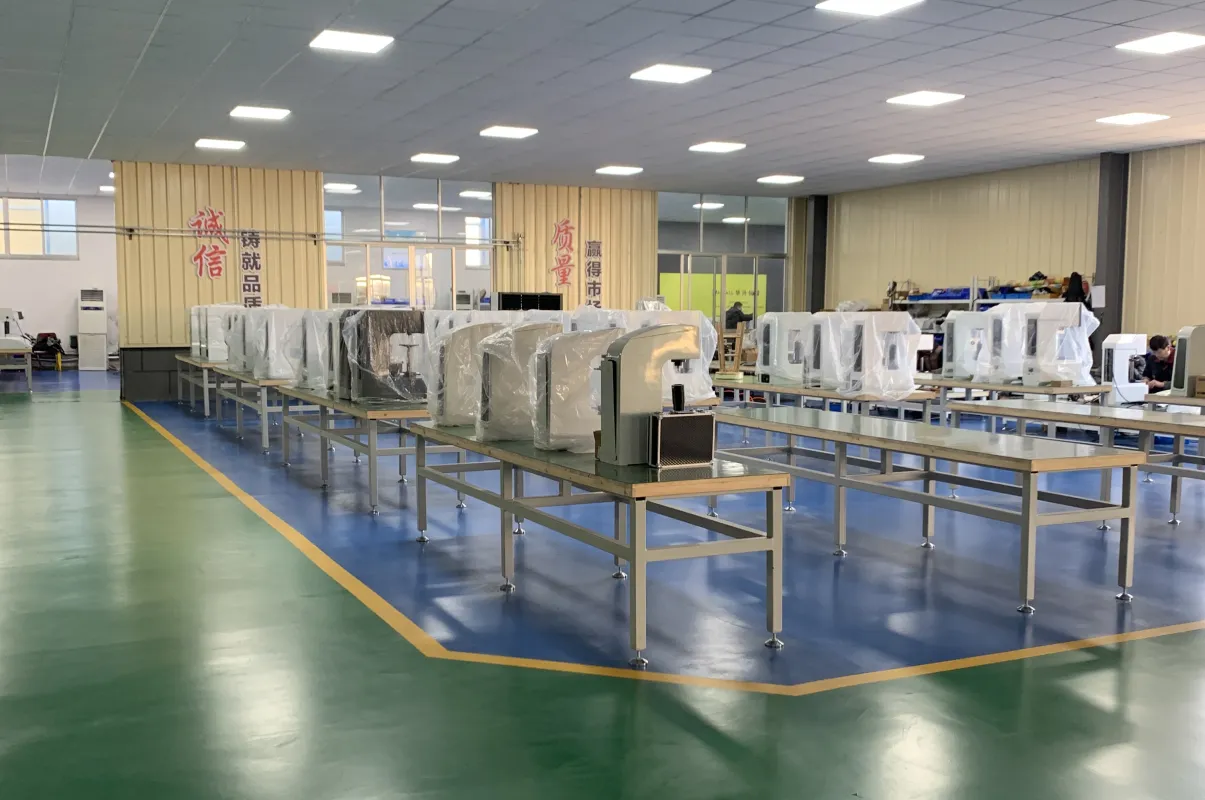
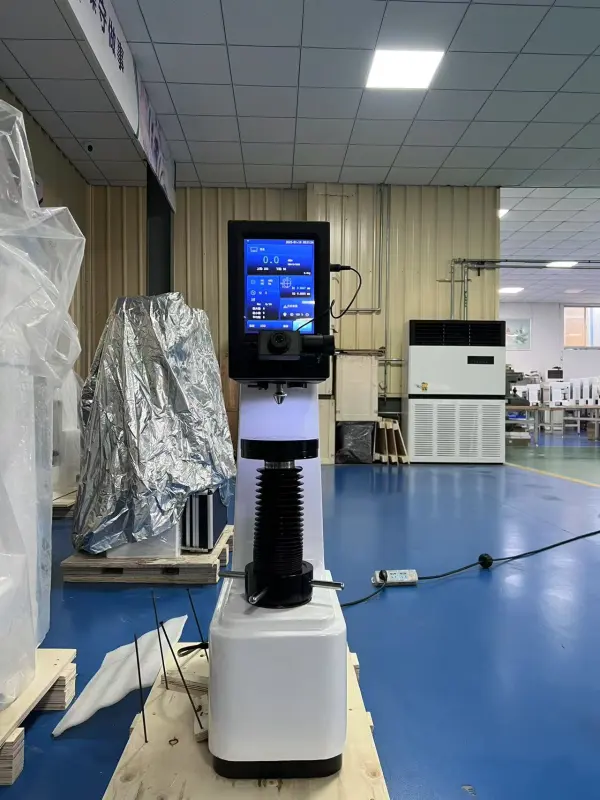
Hardness testing remains a cornerstone in quality assurance and material characterization within mechanical manufacturing, automotive components, and power equipment industries. The newly updated GB/T230.2 standard offers refined guidance on Vickers and Rockwell hardness testing methods, ensuring enhanced precision and reproducibility. This article delves into the fundamental principles distinguishing these two testing approaches, their industrial applications, and practical equipment configurations to optimize testing efficiency under the latest regulatory framework.
Vickers hardness testing employs an indenter that creates a precisely measured diamond-shaped indentation on the specimen’s surface. The hardness value is calculated by assessing the indentation's diagonal length, directly correlating to the material’s resistance to deformation. This method is especially sensitive and accurate for thin materials and coatings, with test loads ranging typically between 1 to 100 kgf.
In contrast, Rockwell hardness testing measures the depth of penetration of a steel ball or diamond cone indenter under specified loads, providing a direct digital hardness value. This methodology is favored for rapid testing, suitable for large-scale production environments due to its faster cycle times and minimal post-processing.
The latest GB/T230.2 standard integrates more stringent calibration protocols and expanded material categorizations, which significantly influence testing outcomes. For instance, it prescribes tighter deviations in indentation measurement and depth reading, reducing result variability by approximately 15% compared to the previous version. This update enhances confidence in test results, especially critical in sectors requiring stringent quality benchmarks like aerospace or automotive safety components.
In mechanical manufacturing, where precision on thin-walled components is paramount, the Vickers test’s ability to utilize micro-level loads makes it ideal for detecting minute structural variances and heat treatment effects. Data from recent case studies show a 20% improvement in defect detection rate when employing Vickers on thin sections versus Rockwell.
For automotive parts, especially bulk metal components like gears and shafts, the Rockwell method offers significant throughput advantages—results are available in seconds with high repeatability and less user interpretation error. This facilitates real-time quality control in assembly lines, helping reduce scrap rates by an estimated 12%.
Power equipment
Selecting the right industrial hardness tester with compliance to GB/T230.2 is essential. For Vickers testing, instruments featuring high-resolution optical systems (≥ 0.5 μm accuracy) and precise load control enhance repeatability. In Rockwell testing, choosing models capable of auto-scale switching and equipped with digital depth sensors reduces operator dependency and error.
Typical operational best practices recommended under GB/T230.2 include: calibrating instruments monthly using certified reference blocks, maintaining ambient temperature between 20-25°C for thermal stability, and applying appropriate surface preparation such as polishing to minimize measurement noise.
Discover tailored hardness testing solutions with full GB/T230.2 compliance —
Explore Our Advanced Industrial Hardness Testers Now
 HR-150A Rockwell hardness tester
manual Rockwell hardness tester usage guide
hardness testing operation procedure
industrial on-site hardness measurement
global hardness tester after-sales service
electronic Brinell hardness tester maintenance
industrial hardness testing guide
hardness tester troubleshooting
HB-3000C usage tips
metal hardness measurement
Electronic Brinell Hardness Tester Calibration
Standard Hardness Blocks
ISO 6506
JIS Z2243
Hardness Tester Maintenance
Brinell hardness testing
black metal hardness measurement
non-ferrous metal indentation deformation
hardness test parameter adjustment
ASTM E10 standard
Vickers hardness testing
Rockwell hardness testing
hardness testing methods
manufacturing hardness measurement
industrial hardness testing equipment
HR-150A Rockwell hardness tester
manual Rockwell hardness tester usage guide
hardness testing operation procedure
industrial on-site hardness measurement
global hardness tester after-sales service
electronic Brinell hardness tester maintenance
industrial hardness testing guide
hardness tester troubleshooting
HB-3000C usage tips
metal hardness measurement
Electronic Brinell Hardness Tester Calibration
Standard Hardness Blocks
ISO 6506
JIS Z2243
Hardness Tester Maintenance
Brinell hardness testing
black metal hardness measurement
non-ferrous metal indentation deformation
hardness test parameter adjustment
ASTM E10 standard
Vickers hardness testing
Rockwell hardness testing
hardness testing methods
manufacturing hardness measurement
industrial hardness testing equipment