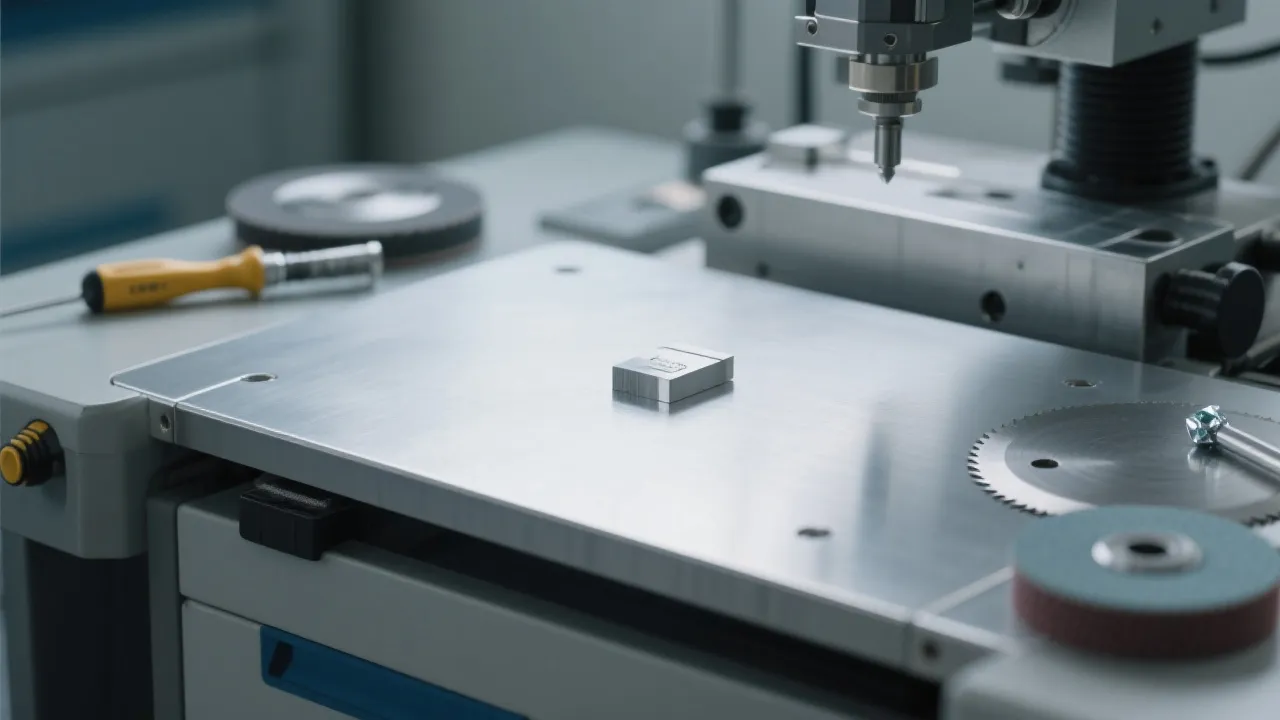
Industrial Vickers Hardness Tester Selection Guide: Material Hardness Grades and Sample Size
2026-02-24
Application Tips
This article provides a practical, standards-oriented guide to selecting an industrial Vickers hardness tester based on material hardness grade, specimen size, and brittleness to ensure accurate and repeatable results. It explains how key performance factors—optical magnification, closed-loop test force control accuracy, and compliance with ISO and ASTM requirements—directly influence measurement reliability and inter-lab consistency. The guide also highlights how an ergonomic, user-friendly interface can streamline workflows and reduce operator-induced variability. In addition, it outlines a complete application pathway covering installation, daily operation, calibration, and routine maintenance, helping users quickly build a stable hardness testing process. Drawing on Leizhou JinCheng Industrial Equipment Co., Ltd.’s Vickers hardness tester capabilities, the article reinforces quality assurance and after-sales support as critical safeguards for long-term quality control in manufacturing, education, and advanced materials analysis.
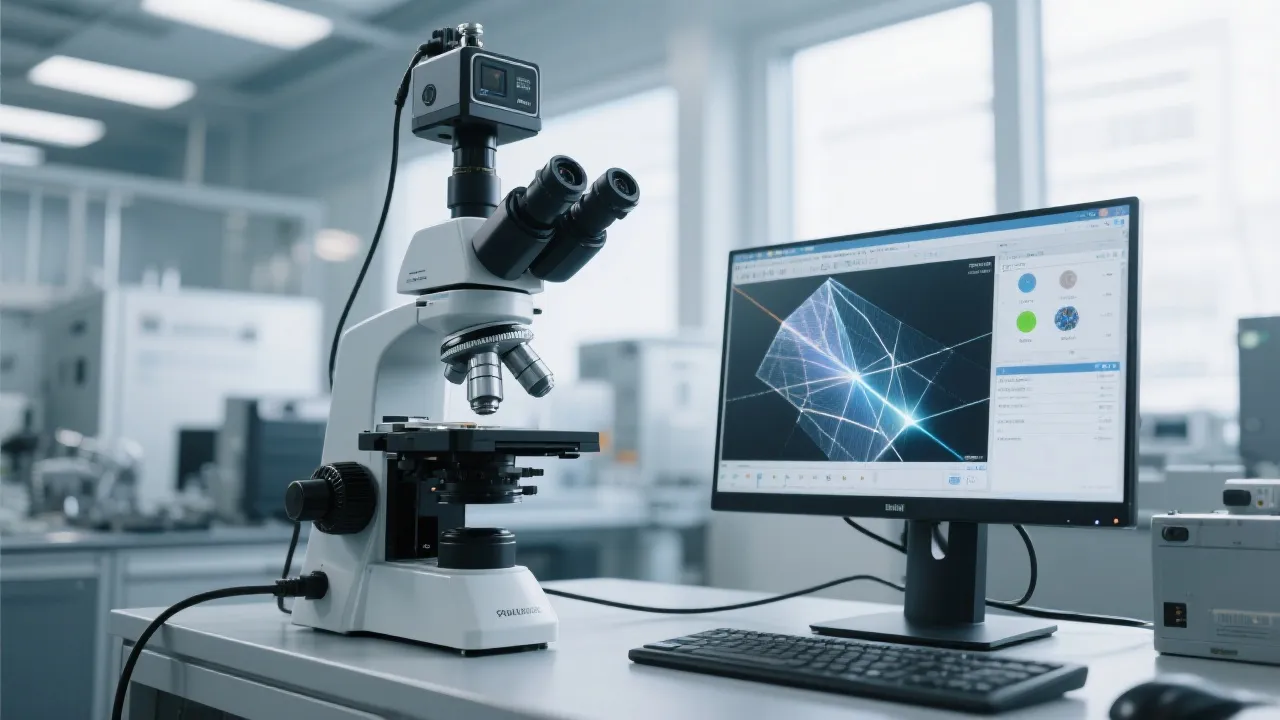
Industrial Hardness Tester Selection: Match Material Hardness Grade & Sample Size for Reliable Results
In production lines, labs, and education settings, hardness testing is often treated as a “quick check.” Yet the wrong tester configuration—especially the wrong load range or optics—can quietly create systematic error that looks like operator variation. This guide explains how to select a Vickers hardness tester based on material hardness level, sample dimensions, and brittleness, with practical benchmarks on magnification, closed-loop force control, and ASTM/ISO compliance. The goal is simple: make hardness values trustworthy enough for quality control, incoming inspection, and material research.
Best for
Metals, heat-treated parts, coatings (when micro-loads are available), sintered materials, brittle ceramics (with careful load choice), and education labs needing repeatability.
Typical repeatability target
For stable setups, many factories aim for ±1.5% to ±2.5% within-lab repeatability on certified blocks (depending on load and surface condition).
Why Vickers
One indenter geometry supports a broad range of materials and hardness levels—ideal when your product mix changes across batches or projects.
1) The 4 Performance Indicators That Decide Your Measurement Accuracy
A. Test force range & closed-loop loading accuracy
A Vickers tester is only as good as its force control. In practical terms, a closed-loop loading system (force feedback) helps keep the applied load stable across operators and over time. For many industrial-grade instruments, a realistic goal is test force control within ±1% and dwell-time stability within ±1 second under standard conditions.
This matters most when you test thin parts, high-hardness steels, or brittle materials—all of which are sensitive to overloading and surface effects.
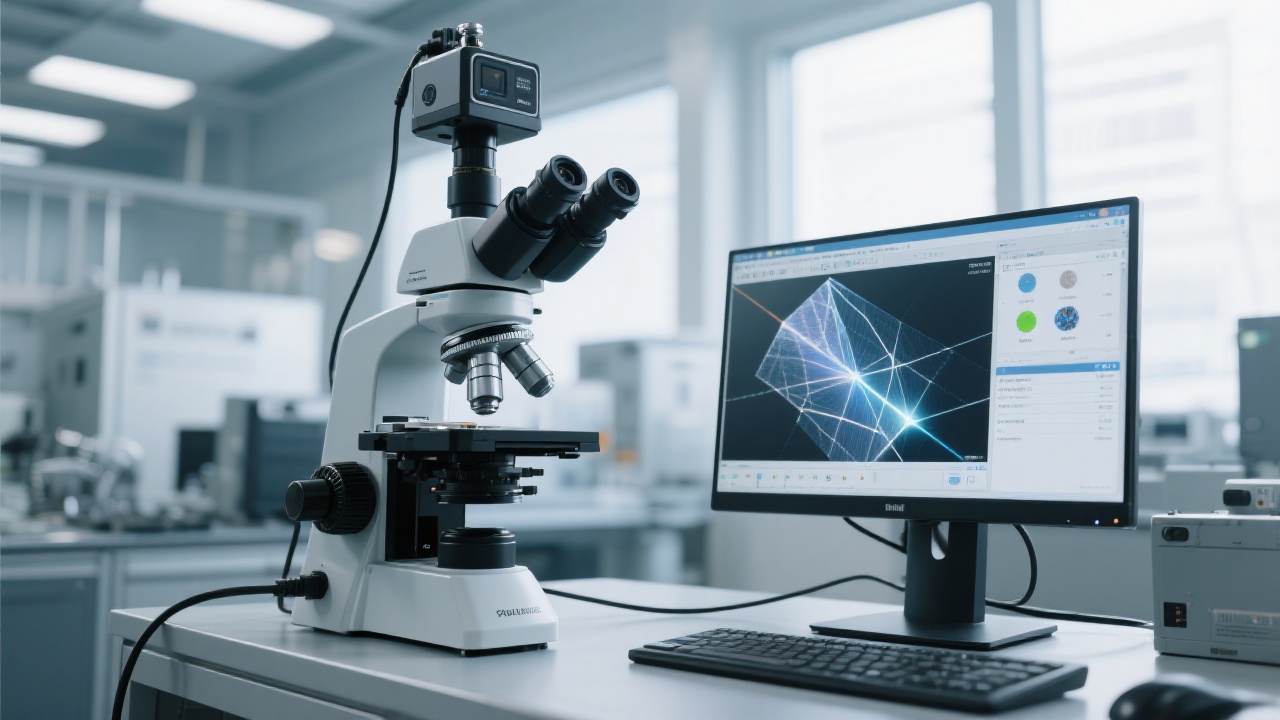
B. Optical magnification & resolution (readability is part of accuracy)
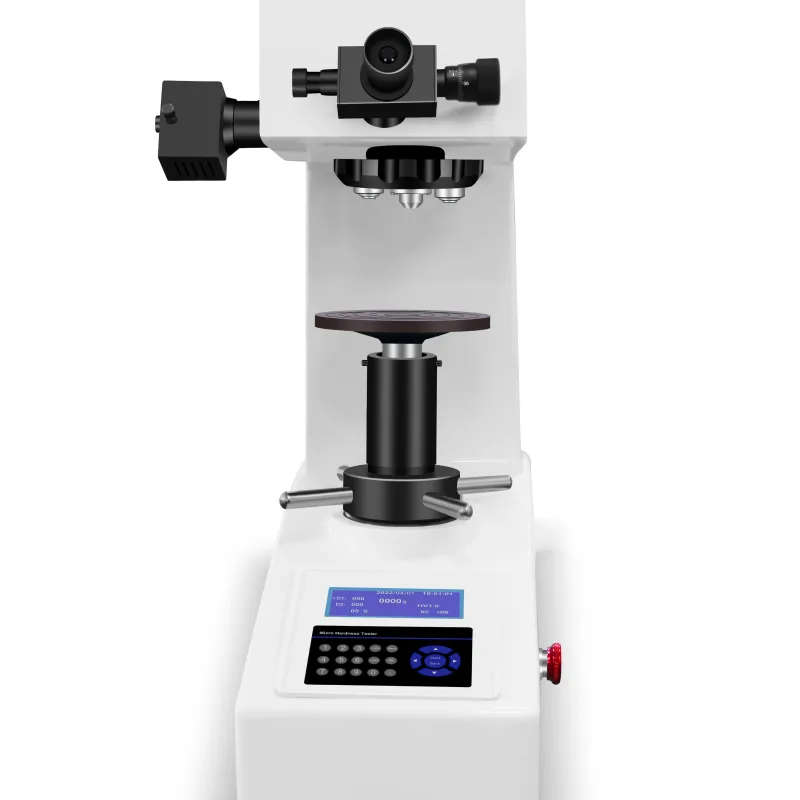
Hardness is calculated from indentation geometry—so edge definition and scale resolution matter. Common configurations include 100× and 400× optical systems. As a working rule:
- 100×: faster routine checks on larger indentations, typical QC throughput
- 400×: better for smaller indentations, higher hardness materials, or tighter tolerances
If your team frequently debates where the indentation corners “really” are, upgrading optics (or switching to a clearer measurement workflow) often improves consistency more than additional training alone.
C. Standards compliance: ASTM & ISO alignment
For export-oriented manufacturing and third-party audits, standards alignment is not optional. Vickers testing commonly references ISO 6507 and ASTM E92 / ASTM E384 (depending on load range and application). Standards affect load selection, dwell time, indentation spacing, and acceptable error—so the instrument’s design and calibration method must support compliant operation, not just the number displayed on the screen.
D. User interface & workflow design (the hidden productivity lever)
In real plants and busy labs, the best tester is the one that operators can run correctly at 9 p.m. after a long shift. A well-structured interface—clear parameter setting, guided measurement steps, and intuitive reporting—reduces re-tests, avoids wrong-force mistakes, and speeds up new-user onboarding. Many teams see a practical efficiency gain of 20–35% after standardizing the workflow and reducing manual transcription.
2) Selection Strategy: Choose by Hardness Level, Sample Size, and Brittleness
Instead of starting with “which model is popular,” start with your material + geometry + acceptance criteria. The table below gives practical selection logic widely used in industry.
| Application scenario |
Recommended approach |
Why it works |
| General steels, aluminum alloys, routine QC |
Standard Vickers range with stable force control + 100×/400× optics |
Balances speed and readability; suitable for high-throughput checks |
| High hardness parts (e.g., heat-treated tooling, hardened shafts) |
Higher magnification preference + strict dwell-time consistency |
Smaller indentations demand clearer corner detection for stable HV values |
| Thin parts / small samples / small test areas |
Lower force capability (micro-load options) + careful spacing rules |
Reduces risk of substrate influence, bending, and edge effects |
| Brittle materials (ceramics, sintered parts, some castings) |
Lower loads, controlled loading rate, strong optics for crack observation |
Avoids chipping/cracking that corrupts indentation geometry |
| Education & advanced material analysis |
Stable calibration workflow + clear UI + reporting templates |
Improves learning curve and ensures reproducible lab results |
A practical note on sample thickness: many labs follow a conservative rule that thickness should be at least 10× the indentation depth. When thickness is borderline, selecting a lower test force (or verifying via cross-checking methods) prevents false readings that look “reasonable” but fail in downstream performance.
3) Case Snapshot: Avoiding False Pass/Fail on Small Heat-Treated Components
A manufacturer testing small heat-treated pins (limited flat area, high hardness) reported inconsistent results between operators and shifts. The root cause was not the material—it was borderline indentation readability under lower magnification and minor variation in dwell time.
Adjustment
Switched to a clearer measurement workflow (higher magnification usage) and standardized dwell time; tightened daily verification using certified blocks.
Result (typical)
Within-lab spread reduced from roughly ±3–4% to ±2% on verification checks, and re-test frequency dropped noticeably in peak production weeks.
Takeaway
When your sample is small, the best “upgrade” is often a combination of optics + force consistency + a human-proof UI—not a bigger machine.
4) Installation, Operation, Calibration & Maintenance: A Practical Workflow
A. Installation essentials (get the environment right)
- Use a stable bench; avoid vibration sources (presses, stamping machines, heavy traffic)
- Keep the tester level and allow warm-up time if required by the instrument
- Control dust and glare; lighting consistency improves indentation edge reading
B. Daily operation (reduce human error)
- Surface prep: ensure clean, flat contact; remove oxide and burrs (a polished surface often improves repeatability)
- Select load & dwell: choose based on sample thickness and brittleness; keep consistent across batches
- Positioning: avoid edges/holes; keep adequate indentation spacing per standard practice
- Measure & record: use consistent corner selection and reporting format; attach batch/heat/lot info
C. Verification & calibration routine (keep numbers audit-ready)
A common and effective practice is to run a quick verification using certified hardness blocks at the start of each day or each critical shift. Many QC teams schedule:
- Daily: verification check on at least one block near your target HV range
- Weekly: verify at two ranges (e.g., mid + high) if you test mixed materials
- Periodically: full calibration and documentation per internal QA plan or audit requirements
If values drift, first inspect the surface condition, indenter cleanliness, optics alignment, and force application consistency before assuming the material changed.
D. Maintenance tips that protect repeatability
- Keep the anvil and contact surfaces clean; small debris can tilt the sample and skew indentation geometry
- Protect optics from dust and fingerprints; store with covers when idle
- Document indenter usage; replace if damage is suspected (edge defects can silently bias HV values)
5) Why Many Buyers Choose Laizhou Jincheng’s Vickers Hardness Testers
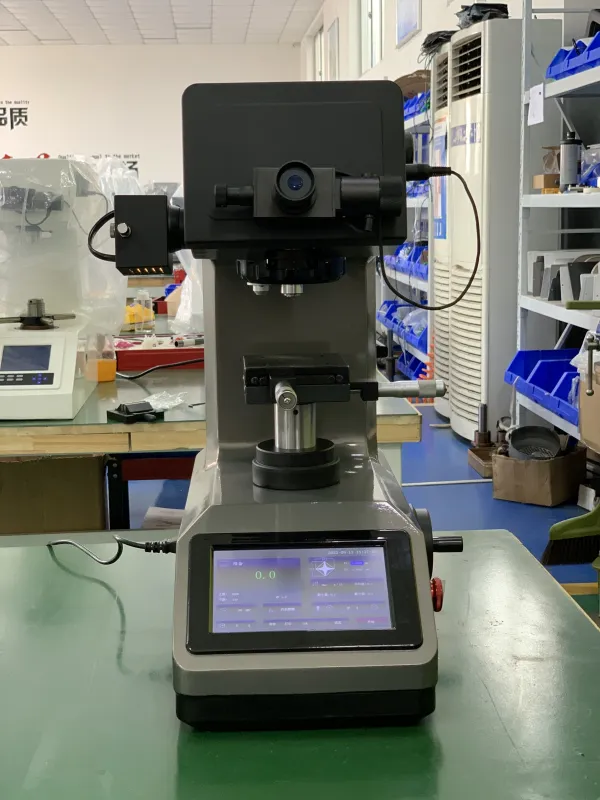
For factories balancing throughput and compliance, and for institutions focusing on accuracy and teaching efficiency, the value of a Vickers tester is rarely a single feature. It is the combination of stable force control, clear optics, standards-aligned testing workflow, and a human-friendly interface that delivers consistent results.
Quality assurance mindset
A robust QA approach supports stable performance over years of production use—especially important when you need comparable data across batches and audits.
Service & technical support
Fast response on setup, training, and troubleshooting reduces downtime. For many buyers, after-sales support is what turns a tester into a long-term QC system.
Operator adoption
When your team can run tests confidently, you reduce rework loops and keep production decisions based on data—not on who was on shift.
FAQ (Based on Real Buyer Questions)
How do I choose the right test force for small samples?
Select the lowest force that still produces a measurable, well-defined indentation. Confirm thickness and keep adequate distance from edges. If results fluctuate, improve surface preparation and increase magnification before increasing force.
Why do two operators get different HV values on the same part?
The most common causes are inconsistent corner reading (optics clarity), variation in dwell time, surface finish differences, and subtle sample tilt. Standardizing the workflow and daily verification with certified blocks typically reduces this gap quickly.
Do ASTM/ISO standards really matter for internal QC?
Yes—standards define consistent practices that make your results comparable across shifts, sites, and suppliers. Even if you don’t submit external reports, standards-based routines reduce hidden variability and audit risk.
Need Help Choosing the Right Vickers Hardness Tester for Your Materials?
Share your material type, expected hardness range, sample thickness, and required standard (ASTM/ISO). A technical specialist can recommend the most suitable configuration and testing workflow to improve repeatability and reduce re-tests.
Get a Vickers Hardness Tester Selection Recommendation





Hardness-TesterHV-1000A-1.jpg?x-oss-process=image/resize,h_800,m_lfit/format,webp)
Hardness-Tester7MHVS-1000A-1.jpg?x-oss-process=image/resize,h_800,m_lfit/format,webp)
Hardness-Tester7MHVS-5103050A-1.jpg?x-oss-process=image/resize,h_800,m_lfit/format,webp)