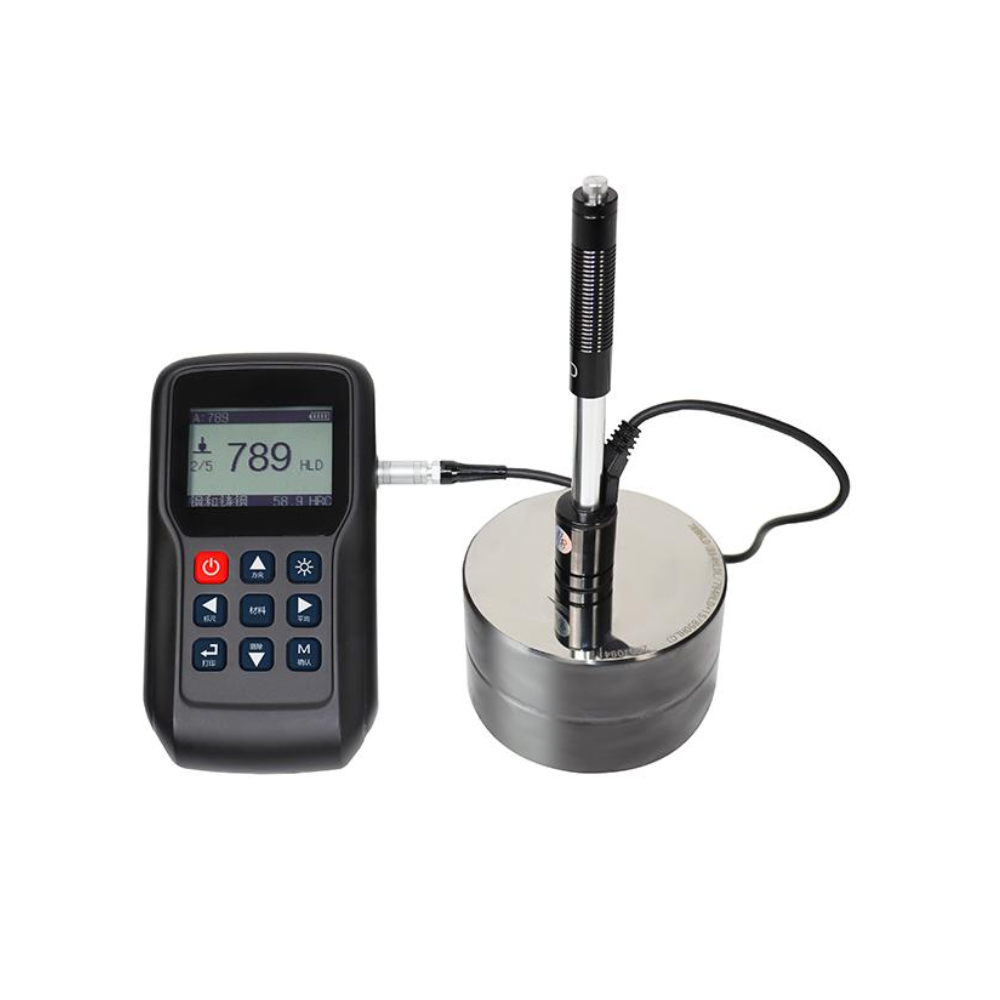
Designed for routine measurement rather than replacing every fixed hardness method, the MHLS-300 combines a standard D impact device, reference block, directional compensation, and digital record handling. This configuration helps laboratories and training teams establish repeatable operating steps while selecting test conditions appropriate to the material and component geometry.
Flexible test positioning
Full-direction settings compensate for horizontal, vertical, upward, and downward measurements, helping users work with accessible surfaces in different orientations.
Reference and scale review
The supplied hardness reference block supports operation practice and basic verification activities. Converted scales assist comparison with technical records when applicable conversion tables are used.
Digital measurement records
Storage for up to 1,000 readings and USB hardness data transfer support result review, report preparation, classroom exercises, and digital archiving. A wireless miniature printer is optional.
Suitable users and evaluation considerations
The MHLS-300 is suited to materials laboratories, technical colleges, universities, research teams, manufacturing training departments, and inspection groups that need portable metal hardness measurement. It is particularly useful for demonstrations, preliminary material comparison, and routine testing of suitably supported metal workpieces.
Leeb test results should be evaluated with regard to material type, surface preparation, component rigidity, thickness, curvature, impact device selection, and measurement direction. For formal quality-control work, users should follow applicable standards, material specifications, and approved laboratory procedures. With its practical portable design, Laizhou Jincheng MHLS-300 provides a clear and organized instrument platform for hardness education and routine metal evaluation.




Hardness-Tester7MHVS-5103050A-1.jpg?x-oss-process=image/resize,h_1200,m_lfit/format,webp)
Hardness-TesterHVS-1000A-1.jpg?x-oss-process=image/resize,h_1200,m_lfit/format,webp)

Hardness-TesterHVS-5103050-1.jpg?x-oss-process=image/resize,h_1200,m_lfit/format,webp)
-1.jpg?x-oss-process=image/resize,h_1200,m_lfit/format,webp)


